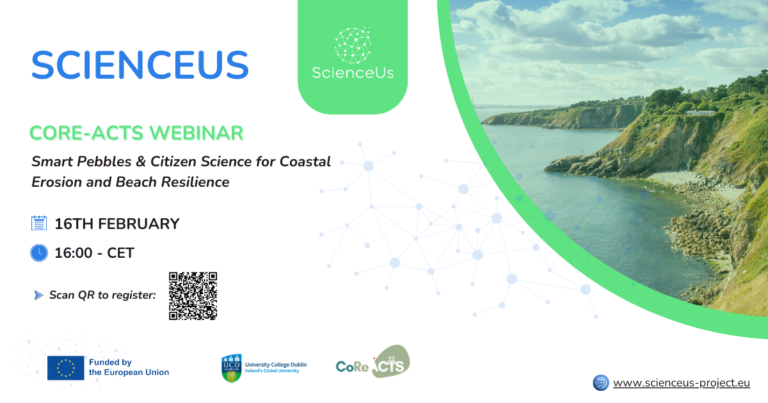
CoRe-ACTS Webinar: Smart Pebbles & Citizen Science for Coastal Erosion and Beach Resilience
Coastal erosion is accelerating across Europe, and communities are increasingly looking for practical, evidence-based ways to understand how their beaches are changing—and what can be done to strengthen resilience.
As part of the ScienceUs funding programme, we’re happy to spotlight an upcoming webinar from CoRe-ACTS, a project exploring an innovative citizen science method for monitoring beach dynamics using low-cost “smart pebbles”.
What is CoRe-ACTS working on?
CoRe-ACTS has developed a simple but powerful approach: pebbles embedded with RFID tags that can be tracked over time to understand sediment movement—a key factor in how beaches evolve, erode, and recover.
So far, the project has focused on Killiney Beach (Dublin) and is now looking to connect with:
Local communities and volunteer groups
Local authorities and councils
NGOs and coastal initiatives
Researchers and practitioners working on coastal resilience
…especially those with pebble beaches who may be interested in testing or adopting this approach.
What you’ll learn in the webinar
During the session, the CoRe-ACTS team will share:
How the smart pebbles work (and what they measure)
What equipment is needed to run the method locally
How communities can get involved in data collection and monitoring
The insights and outcomes the project can deliver for coastal understanding and resilience planning
Webinar details
Date: 16 February
Time: 16:00
Registration: Register here

“Funded by the European Union. Views and opinions expressed are however those of the author(s) only and do not necessarily reflect those of the European Union or European Research Executive Agency. Neither the European Union nor the granting authority can be held responsible for them.”