SCIENCEUS HARVEST PHASE
The Harvest Phase: What is the purpose of the Harvest Phase?
The Harvest Phase is the final stage of the ScienceUs support programme, designed for the five selected citizen science initiatives that have successfully progressed through the previous phases. At this stage, the focus moves from implementation to impact, policy uptake, and wider transfer of results.
During the Harvest Phase, participating projects work to transform the knowledge, evidence, and lessons generated through their citizen science campaigns into outputs that can support policy development, stakeholder engagement, and long-term sustainability.
The Harvest Phase helps supported initiatives move beyond project execution and towards real-world influence. Its main purpose is to ensure that project results are not only communicated, but also translated into forms that are meaningful for policy makers, public authorities, academia, industry, and other stakeholders.
This phase also aims to create a spill-over effect, enabling good citizen science practices to reach and inspire other local and regional initiatives across Europe.
What happens during the Harvest Phase?
During this phase, the selected projects join the ScienceUs quadruple helix test-bed programme, where they engage with key actors from across the innovation ecosystem. Through this process, projects receive targeted support to strengthen the policy relevance, visibility, and sustainability of their work.
Key activities in the Harvest Phase include:
- participation in a Harvest Kick-off Meeting
- implementation of a communication and dissemination plan
- collaboration with policy makers, public authorities, industry, and academia
- preparation of a policy brief or similar policy-oriented output
- tailored training and mentoring on communication, policymaking, exploitation, and sustainability
- submission of the final deliverable, Policy Assessment and Recommendations
Support provided to participating projects
ScienceUs offers dedicated support to help each selected initiative maximise the value of its results. This includes tailored mentoring and guidance in areas such as:
- communicating citizen science results to different audiences
- building stronger links with policy and decision-making processes
- developing recommendations based on project findings
- strengthening collaboration with quadruple helix actors
- improving sustainability and exploitation potential beyond the lifetime of the project
The aim is to equip projects with the tools and capacities needed to turn their outcomes into visible, transferable, and lasting impact.
Expected outputs
By the end of the Harvest Phase, each participating project is expected to produce results that go beyond technical implementation. These include:
- a clear communication and dissemination approach
- stronger engagement with policy and stakeholder communities
- a policy brief or equivalent policy-facing output
- recommendations for future action and uptake
- the final deliverable: Policy Assessment and Recommendations
These outputs are intended to help transfer project learning to other initiatives and contribute to broader discussions around citizen science, public engagement, and policy development in Europe.
Why the Harvest Phase matters
The Harvest Phase is where ScienceUs-supported initiatives consolidate their work and demonstrate how citizen science can contribute to meaningful societal and policy impact.
It is the stage where projects:
- connect results with decision-making processes
- amplify their visibility and relevance
- build stronger transnational communities and collaborations
- share their practices with other initiatives
- contribute to wider policy and innovation discussions linked to the new ERA framework and Horizon Europe missions
In this way, the Harvest Phase helps ensure that the value created through citizen science is not lost at the end of implementation, but carried forward into broader systems of change.
Funding
Projects participating in the Harvest Phase receive up to €14,000 in lump-sum support, linked to the successful completion of the phase and approval of the final deliverable.
Suggested call-to-action section
From results to real impact
In the Harvest Phase, ScienceUs supports promising citizen science initiatives in transforming their findings into policy-relevant knowledge, stronger stakeholder engagement, and sustainable future pathways.
HARVEST PHASE: 5 PROJECTS
CoRe-ACTS – Coastal Resilience: Action Through Citizen Science
Country: Ireland
Lead organisation: University College Dublin
Short Description:
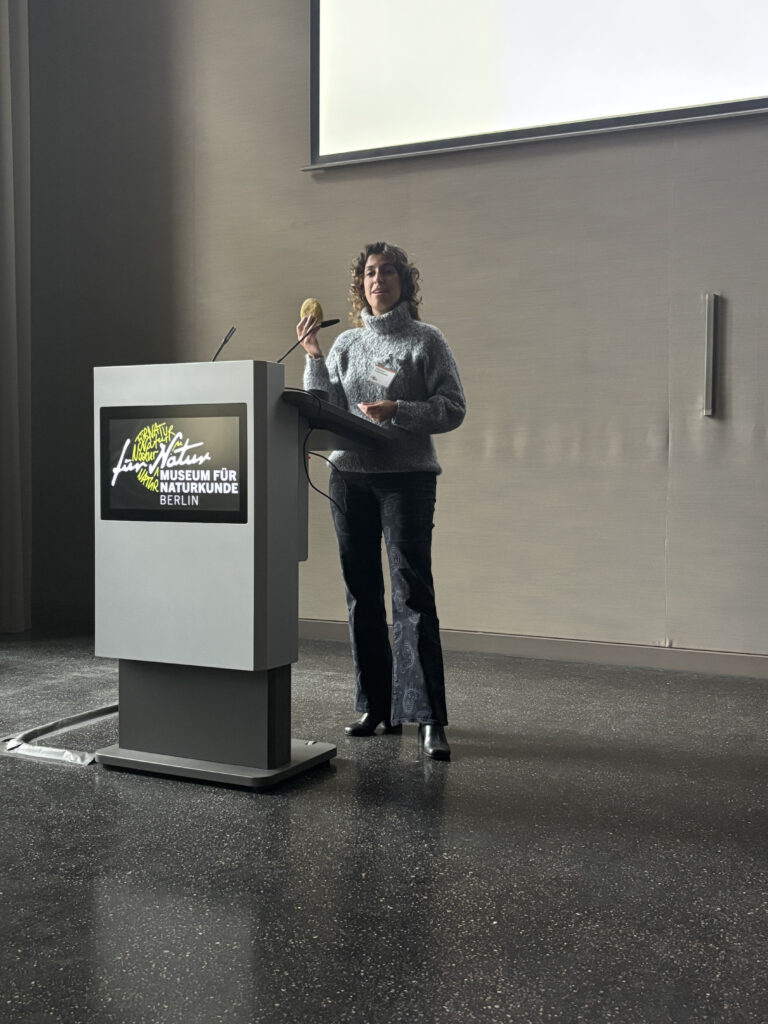
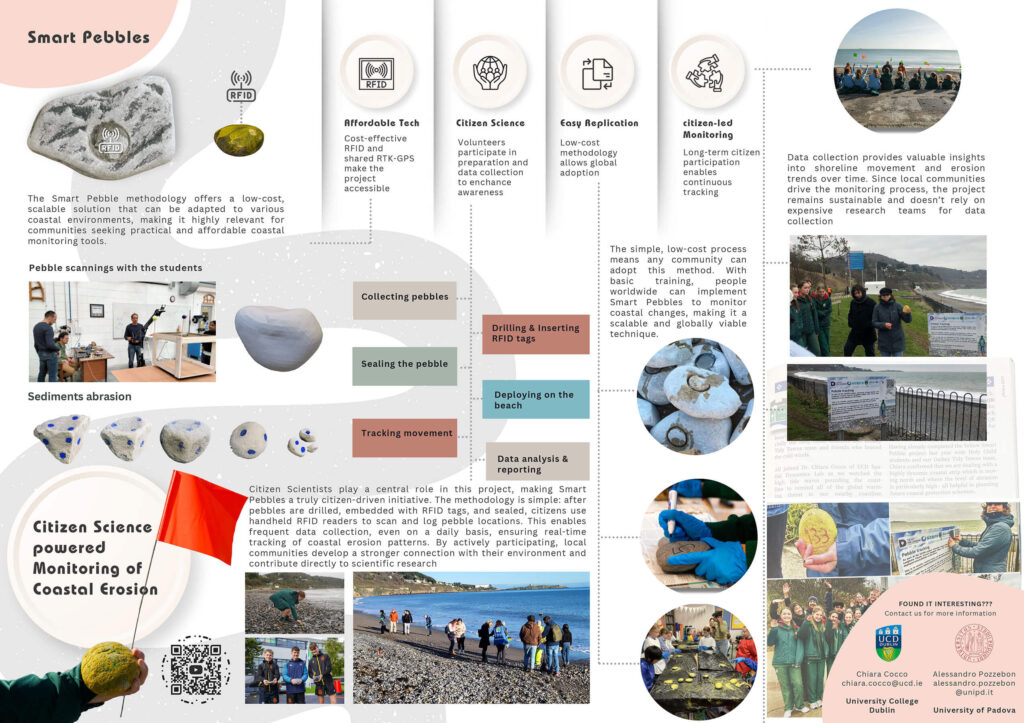
This project aims to expand and enhance the citizen science activities initiated in 2023. The scope of the ongoing CoRe-ACTS project is to turn a technology used by scientists for the study of coastal morphodynamics into a citizen science initiative. The Smart Pebble technology offers a low-cost, scalable solution for assessing sediment transport, erosion patterns, and morphological changes in sediments. Its combination with a citizen science approach has the potential to empower local communities to conduct most of the activities independently, allowing them to actively participate in monitoring coastal dynamics by tracking pebble movement across the beach. Following the successful implementation of the Smart Pebbles project in Killiney, Dublin, involving local groups and schools, this project aims to empower communities to independently conduct their own citizen science initiatives. We will provide all necessary instrumentation and training, integrating these activities into their existing annual plans for village maintenance. The implementation of such an operational protocol would allow the continuous acquisition of data related to pebbles displacement and their morphological changes, providing the scientific team data with a temporal density never reached before within the scientific community. Based on the successful outcomes of this initial Irish project, we aim to develop a replicable citizen science model that can be adapted for implementation on other European beaches.
Objectives & Goals:
The CoRe-ACTS project monitors coastal erosion by employing Smart Pebbles – standard pebbles collected on the beach under study embedded with Radio Frequency identification (RFID) tags which can be detected by a hand-operated Reader. Prior to deployment, each Smart Pebble is 3D scanned and then precisely geolocated using an RTK-GPS. Citizen scientists periodically locate and recover the Smart Pebbles using the reader, re-acquiring their position and 3D model.
Website: https://score-eu-project.eu/2023/10/06/raising-students-awareness-with-the-smart-pebbles-workshop/


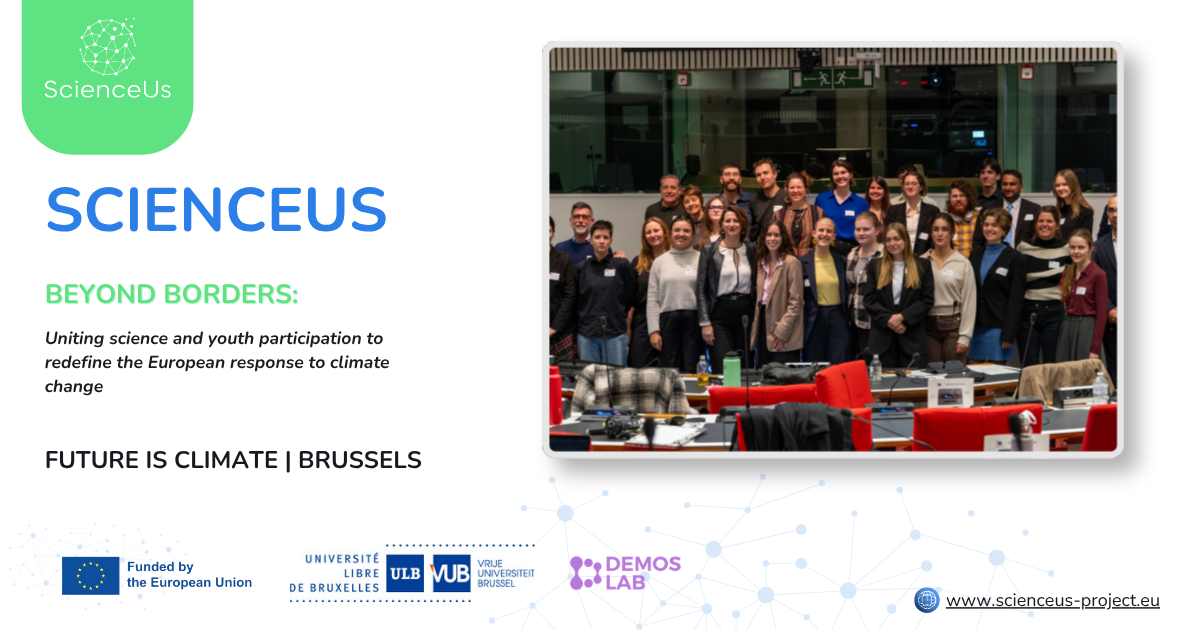
The Future is Climate
Country: Spain
Lead organisation: Demos Lab
Short Description:
The Climate emergency is a paramount concern for young people in Spain, but are we engaging them in adaptation actions, do they participate in climate action solutions? The Future is Climate (FIC) is a citizen participation initiative focused on understanding the main obstacles holding back climate action in Spain, in order to grapple with the complexity of the matter and find common ground by bringing out society’s collective intelligence. FIC is a citizen science and representative deliberative process formed by two deliberative bodies working together: the Climate Metaforum (40 randomly selected young people from all over Spain) and the Climate Advisory Council (20 climate scientists and experts). The aim is to foster sustained engagement from young people on climate action by creating participation mechanisms and to close the gap between scientists and young people by establishing ongoing dialogues.
Our initiative tackles two relevant fields for climate change adaptation:
(1) environmental education, as young people receive training from leading experts, collect their own data on climate action obstacles in their territories to support deliberations and consensus-building and become ambassadors,
(2) environmental governance, as the project includes an ongoing advocacy phase to push for policy changes and establish permanent institutionalized deliberative bodies. Climate change adaptation requires strong citizen engagement and participation, and we will make it happen.
Objectives & Goals:
A citizen participation initiative focused on understanding the main obstacles holding back climate action in Spain, in order to grapple with the complexity of the matter and find common ground by bringing out society’s collective intelligence.


Blue-Green Tops: Adapting Building Roofs for Climate Resilience
Country: Greece
Lead organisation: University of Patras
Short Description:
Urban rooftops hold great potential for climate adaptation. Commonly made of high heat-capacity materials, they contribute to urban heat islands. Transforming them into blue-green roofs can cool cities, manage rainwater, enhance biodiversity, and improve living conditions. However, suitability depends on factors such as roof structure, age, and exposure to sun and wind. This project harnesses the power of Citizen Science (CS) to capture data necessary to accelerate roof transformation and uses Colouring Cities Research Programme /The Alan Turing Institute’s (CCRP ,colouringcities.org) open platform code and infrastructure to enable standardised microspatial data on roofs and buildings to be crowdsourced, visualised, and shared. Athens, a city of severe heat threats, acts as the starting point. With 90% of its buildings featuring flat roofs, it offers prime opportunity for climate adaptation.
Objectives & Goals:
This project harnesses the power of Citizen Science (CS) to capture data necessary to accelerate roof transformation and uses Colouring Cities Research Programme /The Alan Turing Institute’s (CCRP ,colouringcities.org) open platform code and infrastructure to enable standardised microspatial data on roofs and buildings to be crowdsourced, visualised, and shared.
Website: https://www.upatras.gr/en/


Acqua Sorgente
Country: Italy
Lead organisation: Club Alpino Italiano (CAI)
Short Description:
Groundwater vital for the welfare and resilience of both ecosystems and communities. Climate change, overexploitation, and pollution may threaten groundwater availability. Springs are the main manifestations of groundwater resources in mountainous territories. They can provide up to 75 % of total tap water. Not only sources of this vital resource, natural springs themselves can be sites of high biodiversity. It is then crucial to study, and protect springs and groundwater resources. To address these needs, the Italian Alpine Club launched the Acqua Sorgente national Citizen Science Project in April 2024.
The main objectives of the project are:
i) Implement and maintain a national database of spring monitoring data and analyze the data for hydrological research and water protection.
ii) Raise awareness about water resources and disseminate the scientific results.
Volunteers already started collecting spring data which include location, photos, water presence, flow rates, temperature, and electrical conductivity. The data are recorded on the smartphone application and with the portable probes distributed by the Alpine Club. All collected data are uploaded to the Open-Source database validated, and displayed on the interactive map. In 2024, the database reached over 800 validated entries. The data have been used to push hydrological research. Outreach efforts included public events, three high school projects and official collaborations with universities and research institutions.
Objectives & Goals:
The main objectives of the project are:
- i) Implement and maintain a national database of spring monitoring data and analyze the data for hydrological research and water protection.
- ii) Raise awareness about water resources and disseminate the scientific results.
Website: https://www.cai.it/


Alleviating Energy Poverty in Vulnerable households
Country: Spain
Lead organisation: Spanish Red Cross
Short Description:
Since 2017, the Spanish Red Cross has been running a program to tackle energy poverty in more than 52 cities across the country. The goal is to reduce the vulnerability of households most affected by climate change by improving energy efficiency, installing renewable energy systems, and promoting citizen empowerment. Through citizen science activities, the project monitors energy consumption, identifies improvement measures, and fosters climate adaptation with a social and participatory approach. It also contributes to reducing CO₂ emissions and improving health and comfort at home.
This project addresses energy poverty as a key barrier to climate adaptation in vulnerable communities. Building on existing education and awareness programs, it leverages citizen science methodologies to empower households to monitor, understand, and optimize their energy consumption. Through a participatory approach, citizens gather data on energy usage and housing conditions using tools such as energy surveys, thermal sensors, and on-site visits.
This data generates actionable indicators to identify challenges, inform targeted interventions, and promote energy-efficient solutions that mitigate climate risks like heatwaves and cold spells. Implemented activities include home retrofitting and the adoption of soft energy efficiency measures. In collaboration with volunteers, local communities, and authorities, the project aims to:
- Raise awareness of energy efficiency.
- Facilitate citizen-led data collection to assess energy poverty and its impacts.
- Propose affordable and scalable solutions.
- Decrease emissions and enhance climate resilience
The outcomes will contribute to the EU mission “Adaptation to Climate Change” by advancing inclusive strategies that improve living conditions while addressing environmental challenges. By combining citizen science with practical solutions, the project establishes a foundation for broader European initiatives, demonstrating how community-driven efforts can tackle societal and climate-related issues.
Objectives & Goals:
In collaboration with volunteers, local communities, and authorities, the project aims to:
- Raise awareness of energy efficiency.
- Facilitate citizen-led data collection to assess energy poverty and its impacts.
- Propose affordable and scalable solutions.
- Decrease emissions and enhance climate resilience.


Partners
The ScienceUs team is formed by universities from the CIVIS Alliance and the Museum für Naturkunde that brings its expertise and networks generated thanks to its leading role in EU-citizen science and its successor, European Citizen Science.
ScienceUs is led by the Universidad Autonoma De Madrid (Spain). Together with other 6 universities from the CIVIS, (Aix Marseille Université(France), Ethniko Kai Kapodistriako Panepistimio Athinon (Greece), Universitatea Din Bucuresti (Romania), Universite Libre De Bruxelles (Belgium), Universita Degli Studi Di Roma La Sapienza (Italy), and Eberhard Karls Universitaet Tuebingen (Germany)) and the Museum Für Naturkunde (Germany) have joined to work together on the ScienceUs project, offering diverse experiences and know-how, and representing a broad, balanced, and targeted geographical area.